
Holding It Together
To Tell the Truth in Nonfiction, Study Poetry

About a month ago, somebody emailed me a handout, said, “You might like this!” and I replied, “Oh but I made this!” I added a laughing emoji (“face with tears of joy”) because I 1) genuinely found the situation amusing and 2) am a geriatric millennial.
I made the handout in 2021 and first distributed it after giving the talk “To Tell the Truth in Memoir, Study Poetry.” The handout includes examples from literary nonfiction—not strictly memoir—featuring poetic tricks related to the topic of my talk. You could call these “poetic devices,” I guess, but “devices” reminds me of all the stuff in my house that I don’t like (Google Home Mini), don’t know how to access (porch camera), and don’t use (oven). And “techniques” sounds stuffy. Tricks, though, can be fun!
To better understand the handout, I recommend first reading the talk, which considers associative logic as a stylistic choice.1
I. BRAIDED RESEARCH HELD TOGETHER BY META-COMMENTARY
Aisha Sabatini Sloan, from “A Clear Presence”

As a child, Rodney King used to swim or fish with his father and brother in the irrigation canals near his grandmother’s Sacramento home. “I loved the way I looked,” he remembers. “The way my body sucked up the sunshine, the way my hair dried off with a shake.” As an adult, he looked himself up on the Internet, and found that his name had become a piece of slang: when someone has been beaten by police, you might say he’s been “Rodney King’d.” He writes, “Rodney King’d? So now I’ve become a verb, but when will I become a real person, a whole person?”
“On a hot, still, cloudless day,” Hockney’s biographer, Christopher Simon Sykes, writes, “with the sun at its highest in the sky, the heat at its most intense and the surface of the water in the swimming pool mill-pond calm, a diver has leapt from the diving board and disappeared into the depths of the pool, gone for ever, his existence marked only by a violent eruption of water that is in complete contrast to the ongoing stillness of the scene.”
Of taking his award-winning dive, Dr. Sammy Lee recalls, “The pool had a skylight, and when I went up to do my last dive—a forward three-and-a-half somersault—the sun broke through the clouds and I thought, ‘Oh, Jesus Christ.’”
When I heard that King had died, two details in particular stuck out to me. One was that he’d died in a swimming pool. The other was that, earlier that day, somebody had heard him scream. As Anthony McCartney reports, neighbor Sandra Gardea “heard sobbing from his house earlier that morning.” She said, “It sounded like someone really crying, like really deep emotions. … Like tired or sad, you know?”
The way Hockney describes a body in a pool is not unlike the image we’ve seen, time and time again, of King’s face after he was beaten: “If somebody went under the water or made a splash, the splash was on the water’s surface, you could look into the water and the figure was distorted.” He notes, “The arms become long, the body goes odd and you begin to look like a lobster or a crab.”
I tried to write an essay about David Hockney and Rodney King once before, before King passed away. While doing research, I became obsessed by a particular painting that Hockney had created of a Beverly Hills housewife. Painted one year after the Watts riots, Hockney’s housewife gazes idly outside the range of the portrait. She is miles away but I want badly to imagine that she can hear the sound of sirens. I wish that she could at least smell the smoke.
Jazmina Barrera, from On Lighthouses, translated from Spanish by Christina MacSweeney

The décor of the suites reflects the respective periods and tastes of the writers, with their complete works on the bookshelves. I would have loved to sleep in Virginia Woolf, with its Victorian furnishings and a window looking out to sea, giving a distant glimpse of Yaquina Head and, on its promontory, the lighthouse. I’d just started reading To the Lighthouse: it’s not clear to me now if it was a matter of chance or, knowing that I was going to visit such a building, I forced the coincidence.
The lighthouse in Woolf’s novel takes its inspiration from one located on the coast of Cornwall, where the author used to spend the summer with her family: a small white structure with many windows, built on an island. To the Lighthouse opens by a window, with Mrs. Ramsay’s promise to her son James that the following day, if the weather is good, they will visit the lighthouse near their summer home.
II. WORDPLAY
Inger Christensen, from “The Regulating Effect of Chance,” translated from Danish by Susanna Nied

I have an anagram that might be useful here. If we take the Italian word for paradise—paradiso—and rearrange the letters, we get diaspora. Diaspora is the Greek word for “scattering” or “diffusion.” It can be used to refer to religious groups or believers in any set of ideas, who live, or are forced to live, dispersed in lands where beliefs are different from their own. One example is the Jewish people sometimes called Diaspora Jews.
A whole new exercise could be inherent in this anagram, one that might slowly shift the address of paradise. All we have to do, each time we read the word paradise, is act as if we have become dyslexic enough to see it as diaspora. It’s true that we’re banished from paradise, but maybe we’ve brought it along, literally, in our diaspora. And considering how European history is going these days, it may not be such a bad idea for us to become able to see our diaspora as a mystical place of human beings’ undifferentiated existence in the world.
Hélène Cixous, from Three Steps on the Ladder of Writing, translated by Susan Sellers and Sarah Cornell
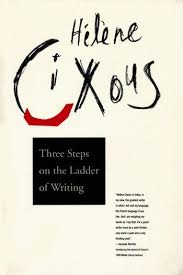
Let us go to the school of writing, where we’ll spend three school days initiating ourselves in the strange science of writing, which is a silence of farewells. Of reunitings.
I will begin with: H
This is what writing is.
I speak to you today (today April 24, 1990, today June 24, 1990) through two languages. From one day to another, from one page to the other, writing changes languages. I have thought certain mysteries in the French language that I cannot think in English. This loss and this gain are in writing too. I have drawn the H. You will have recognized it depending on which language you are immersed in. This is what writing is: I
one language, I another language, and between the two, the line that makes them vibrate; writing forms a passageway between two shores.
H: you see the stylized outline of a ladder. This is the ladder writing climbs; the one that is important to me. Perhaps you were going to tell me this H is an H. I mean the letter H. After all, in French H is a letter rich in significance. Indeed, I write H, and I hear hache (axe). H is pronounced ash in French. This is already transporting for whosoever desires to write. In addition to this hache—a cutting instrument, an axe to clear new paths—the letter is granted uncommon favors in the French alphabet. If A is masculine, as is B, C, D, E, etc., only H is masculine, neuter, or feminine at will. How could I not be attached to H?
In addition, in French, H is a letter out of breath. Before it was reduced to silence during the French Empire, it was breathed out, aspirated. And it remembers this, even if we forget. It protects le héros, la hardiesse, la harpe, l’harmonie, le hazard, le hauteur, l’heure from any excessive hurt.
I can only tell you these mysteries silently in French. But in English there’s breath; let’s keep it.
III. COLLAGED SOURCES
Shawn Wen, from A Twenty Minute Silence Followed by Applause
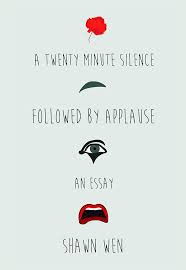
FROM MARCEL AND ME: A MEMOIR OF LOVE, LUST, AND ILLUSION BY PAULETTE FRANKL
“His dominant French nose gave me pause to fantasize the corresponding length of other body parts.”
“I was startled by his short stature and knocked aback by his pungent bad breath.”
“The open kimono and low cut of his costume revealed his pleasantly hairy chest.”
“From a distance, I thought he was a woman!”
“His flesh was as soft as a jellyfish.”
“I was the object of his feeding frenzy.”
“I was pleased to discover that not all parts of his body were equally subject to the aging process.”
“He was all about control.”
“He cherry-picked his women from an abundant pool of the young and beautiful.”
“I’ll call you.”
Jean Stein, from Edie: American Girl (edited with George Plimpton)

Danny Fields: There was a lot of acid around then . . . LSD . . . the first days of it, and most of those people down from Cambridge knew Timothy Leary and Richard Alpert. In the refrigerator they used to keep little brown vials of liquid to drop on a sugar cube. Edie would drive her Mercedes on acid! I thought that was the most daredevil thing she’d ever been into . . . I mean, she’d go up on curbs sometimes, and she’d never pay much attention to traffic lights. It was like everything else: her own rules applied.
Chuck Wein: We liked bizarre people because we didn’t really take ourselves that seriously, and we were amused about how seriously everybody else seemed to take themselves. That was our approach at that point.
We rode around in that gray Mercedes, staying up all night after the discotheques closed at four. Sometimes I’d drive, but Edie loved to drive herself . . . it was like riding a horse. She told me all about her family. She seemed to love her mother . . . it was almost “the poor dear . . . the poor thing is going to be so worried.”
Tom Boodwin: Edie got into spending her inheritance. It was a time when the first discotheques were opening—like Ondine—and people were beginning to live it up in places like that. We often went stoned drunk to a place called L’Avventura to have these gigantic dinners. Edie loved salmon. And extra lemons for her Bloody Marys. All that extra this and that. She ate vast quantities of shrimp. Shrimp and salad, stuff you would think was healthy. But she had four of whatever it was.
I quit my job at the Right Bank restaurant to be her chauffeur. She paid me one hundred dollars a week. We had first met in Cambridge when she was studying sculpture and had gotten to be friends in a curious non-lover way. It was a bit of a strange arrangement to be her chauffeur, but it seemed okay to me. Then I went pow into a taxi in front of the Seagram building and cracked up her Mercedes. I felt so bad, because she loved that car. But it didn’t faze her in the least. She didn’t get angry. We began traveling in limousines.
Bob Neuwirth: Bob Dylan and I occasionally ventured out into the poppy nightlife world. I think somebody who had met Edie said, “You have to meet this terrific girl.” Dylan called her, and she chartered a limousine and came to see us.
IV. METAPHORS AND SIMILES
Gabriela Wiener, from “Guru & Family,” translated from Spanish by Lucy Greaves and Jennifer Adcock
If Badani were an electrical appliance, he would be one that chops, dices, and shreds his interlocutor at a thousand revolutions per second. When he speaks—or rather when he soliloquizes—he smooths out his mustache with a delicate movement of his thumb and index finger. Erecting an argument or even just assembling a phrase in his presence is impossible. Badani senses your intentions, anticipates your answers, reads your facial expressions, and is wary of your words. It would be foolish to expect any less from him—a man who is a polygamist, tech expert, zealous anti-Catholic, sexual erudite, and devotee of the concept of freedom, which he understands as the liberty to choose one’s own shackles. Badani is also addicted to etymology. “Family,” he says, “comes from the Latin famulus, which means “slave.” He has six of them.
Durga Chew-Bose, from “On the Endless Expressions of Emma Stone”
I don’t know, I don’t know about Emma Stone. Those big, pale green eyes, beetling out of her face, green the way blue lagoons look green. Translucent like silver foil. Like lampwork glass — two beads — or Chartreuse liqueur. Those eyes, a little spellbound, limpid, hungry. Technicolor, as if plucked from Powell and Pressburger. Or bringing to mind a Douglas Sirk heroine’s bathetic glow from the 1940s.
Because when Stone squints, she references Lauren Bacall. That husky burr; they share it. They dispense it, and suggest with it. It’s a staunch sound, and in Crazy, Stupid, Love, Stone duplicates it, literally. In bed with Ryan Gosling, she does a Bacall impression — a wonderfully cheesy High Point coffee commercial from the ’80s: “My favorite time of day is night,” she says. “I love curling up with a rich cup of coffee. You think coffee and sleep don’t mix? They do if it’s High Point! It’s decaffeinated!” It’s a silly nothing moment. Still, to conjure Bacall while in bed with Gosling — he could be her Bogie — is more than just a nod to likeness, it’s the murmurings of screen lineage and the pure mettle invoked by narrowing her stare and dipping her chin and looking altogether … fizzy. What is it about Stone that feels carbonated? That slight sting associated with her (she’s been cast as Cruella de Vil) — that natural effervescence (in 2017 she looked like an Oscar holding her Oscar). How Stone seems both bubbly yet pressurized (again, Bacall, but also Stone’s turn as Billie Jean King in Battle of the Sexes).
V. SYNTAX (WITH ATTENTION TO REPETITION)
Hilton Als, from The Women
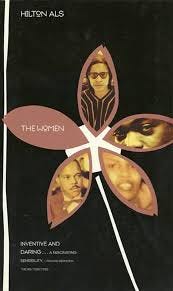
My mother avoided mentioning the fact that her mother, in Barbados, had had a child with a man other than my mother’s father, and that man had been beautiful and relatively rich. She avoided explaining how her mother had thought her association with that relatively rich and beautiful man would make her beautiful and rich also. She avoided explaining how, after that had not happened for her mother, her mother became bitter about this and other things for the rest of her long life. She avoided contradicting her mother when she said things like “Don’t play in the sun. You are black enough,” which is what my grandmother said to me once. She avoided explaining that she had wanted to be different from her mother. She avoided explaining that she created a position of power for herself in this common world by being a mother to children, and childlike men, as she attempted to separate from her parents and siblings by being “nice,” an attitude they could never understand, since they weren’t. She avoided recounting memories of her family’s cruelty, one instance of their cruelty being: my mother’s family sitting in a chartered bus as it rained outside on a family picnic; my mother, alone, in the rain, cleaning up the family picnic as my mother’s aunt said, in her thick Bajun accent: “Marie is one of God’s own,” and the bus rocking with derisive laughter as my heart broke, in silence. She avoided mentioning that she saw and understood where my fascination with certain aspects of her narrative—her emigration, her love, her kindness—would take me, a boy of seven, or eight, or ten: to the dark crawl space behind her closet, where I put on her hosiery one leg at a time, my heart racing, and, over those hose, my jeans and sneakers, so that I could have her—what I so admired and coveted—near me, always.
Myriam Gurba, from Mean
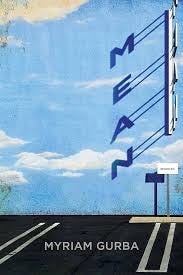
Some of us use oil portraits to tell time.
Some of us use bullet holes to tell time.
Some of us use grandparents to tell time.
Some of us use the memory of our abuelita’s casket, suspended by ropes and lowered into Guadalajara soil, to tell time.
Cyndi Lauper’s saddest song is about time.
I regret referring to associative logic as a stylistic “device,” just as I regret letting the Google Home Mini into my house—however, the Mini did serve as a useful literary “device” in A Silent Treatment. “Hey Google” queries allowed me to transform research about social ostracism into scene.